The Actual Way to Tell Whether Uncomfortable New Shoes Will Break In or Never Will
‘Just break them in’ gets applied as blanket advice to any uncomfortable new pair of shoes, but the actual location of that discomfort on the foot genuinely predicts whether a given pair will actually improve with continued wear or will simply stay uncomfortable indefinitely no matter how much break-in time gets given.

Why Discomfort Location Genuinely Predicts Break-In Potential
Discomfort caused by a stiff upper material that hasn’t yet flexed to match the foot’s shape — at the top of the foot, along a rigid seam, at a stiff heel counter — genuinely tends to soften and improve with repeated wear as that upper material flexes and molds, while discomfort caused by the shoe’s actual structural length, width, or arch position being genuinely wrong for the foot doesn’t improve with wear at all, since flexing a stiff upper doesn’t change the shoe’s fundamental structural dimensions.

The Concrete Distinction Actually Involved
Material-based discomfort from stiffness is genuinely temporary and tied to how flexible the upper material currently is, while structural discomfort from incorrect length, width or arch position is genuinely permanent and tied to the shoe’s fixed physical dimensions — the practical distinction is whether the specific uncomfortable spot involves a stiff material that could physically soften, or a size and shape mismatch that physically can’t change no matter how much the shoe gets worn.
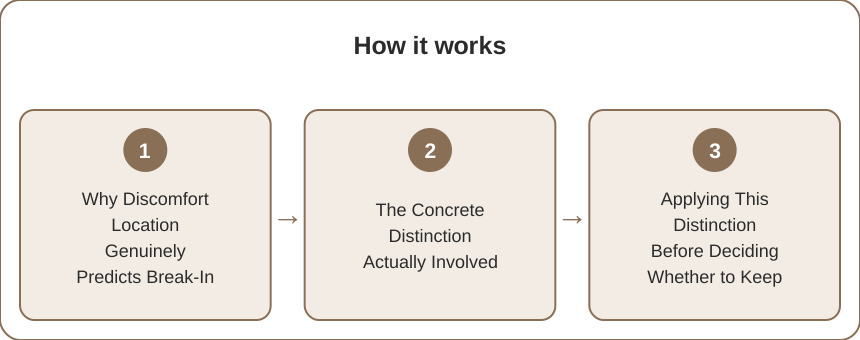
Applying This Distinction Before Deciding Whether to Keep Wearing Through Discomfort
Identify specifically whether the discomfort is coming from a stiff material pressing against the foot or from the shoe feeling structurally too short, too narrow, or wrong in arch position, and only continue wearing through discomfort that’s genuinely material-based, since continuing to wear a structurally wrong-sized shoe through discomfort in hopes it will break in is time and pain spent on a problem that break-in genuinely cannot fix.
Discomfort caused by a stiff upper material genuinely tends to soften and improve with continued wear as that material flexes to match the foot, while discomfort caused by a shoe’s actual structural length, width or arch position being wrong for the foot genuinely doesn’t improve no matter how much break-in time is given, since flexing a stiff upper doesn’t change the shoe’s fixed physical dimensions — so identifying specifically whether a given discomfort is material-based or structural before deciding whether to keep wearing through it prevents wasting break-in time and pain on a structural mismatch that break-in genuinely can’t fix.
Keep Reading
This article is for general styling and informational purposes only. Trends, sizing, availability and pricing may vary by brand and season.